Acting coach

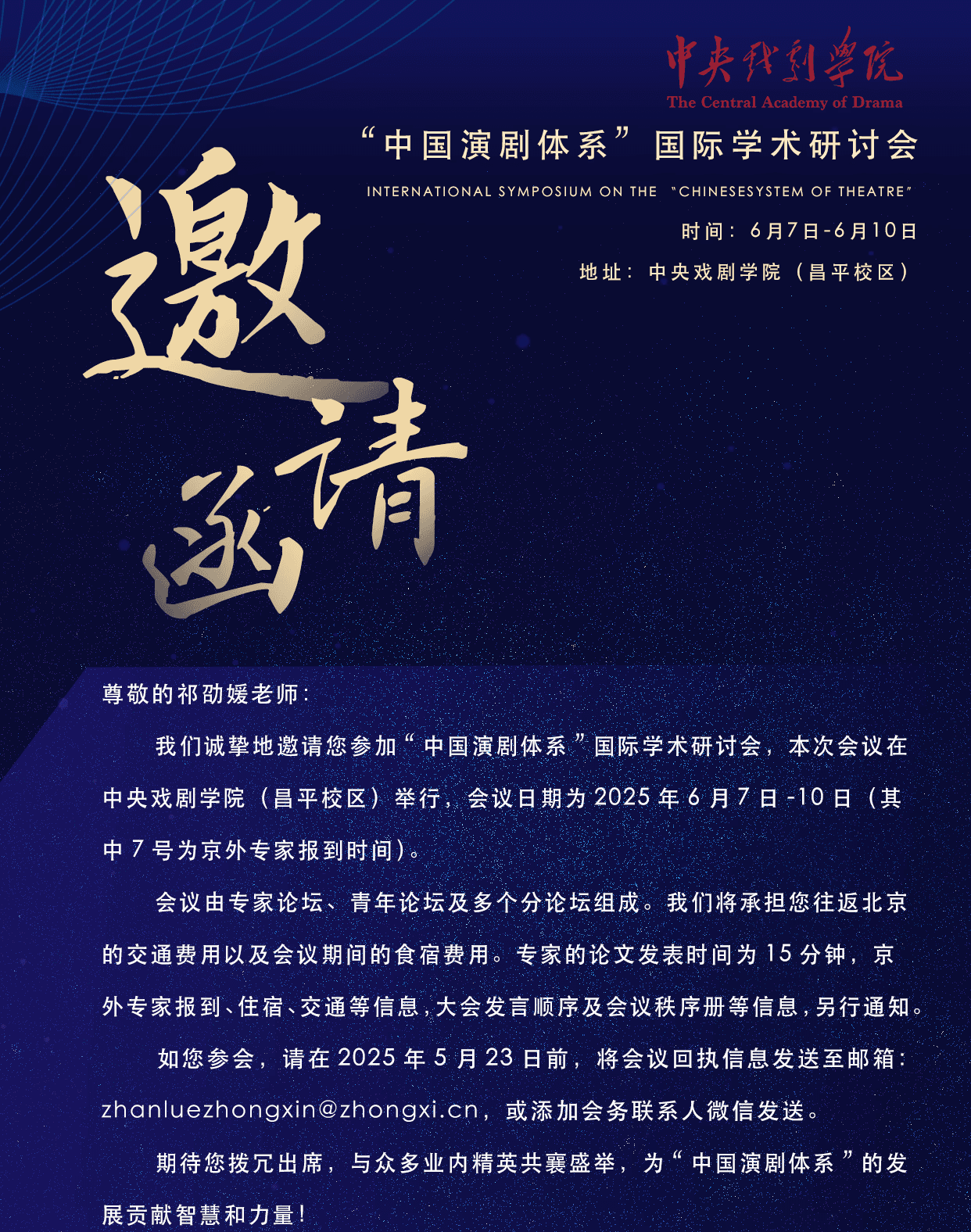
2025 – Full-Length Conference Paper
2025 – Full-Length Conference Paper
Cross-Cultural Insights from British Eclectic Actor Training
Publisher
International Symposium on the “Chinese System of Theatre”
Type
Full-length Conference Paper (15000 words)
Charting a Pathway for Developing Innovative Stage Actors within the Chinese System of Theatre: Cross-Cultural Insights from British Eclectic Actor Training in Classical and Contemporary Acting
Title of the Paper (in Chinese):析绘中国演剧体系·创新话剧表演人才培养之径:英国“古典—当代折主义”演员训练的跨⽂镜鉴
Full-length Conference Paper (15000 words); Invited expert presentation at the International Symposium on the “Chinese System of Theatre”.
This paper critically examines a persistent conceptual misalignment in contemporary Chinese actor training, particularly the unexamined adoption and misinterpretation of “realist acting” as a dominant pedagogical framework. Drawing on practice-based research and cross-cultural comparison with leading UK drama schools (including RADA, RCSSD, and LAMDA), the study identifies how fragmented borrowing—detached from action-based logic—has weakened methodological coherence in actor training. The paper proposes a conceptual shift towards a classical–contemporary eclectic model, repositioning action as the organising principle of training, reactivating classical texts as pedagogical structures, and advocating for trial-and-error processes that support method deconstruction, integration, and independent creative judgement. The research contributes to ongoing debates on developing innovative actor training within the Chinese System of Theatre through methodological clarity rather than stylistic imitation.
Charting a Pathway for Developing Innovative Stage Actors within the Chinese System of Theatre: Cross-Cultural Insights from British Eclectic Actor Training in Classical and Contemporary Acting
Title of the Paper (in Chinese):析绘中国演剧体系·创新话剧表演人才培养之径:英国“古典—当代折主义”演员训练的跨⽂镜鉴
Full-length Conference Paper (15000 words); Invited expert presentation at the International Symposium on the “Chinese System of Theatre”.
This paper critically examines a persistent conceptual misalignment in contemporary Chinese actor training, particularly the unexamined adoption and misinterpretation of “realist acting” as a dominant pedagogical framework. Drawing on practice-based research and cross-cultural comparison with leading UK drama schools (including RADA, RCSSD, and LAMDA), the study identifies how fragmented borrowing—detached from action-based logic—has weakened methodological coherence in actor training. The paper proposes a conceptual shift towards a classical–contemporary eclectic model, repositioning action as the organising principle of training, reactivating classical texts as pedagogical structures, and advocating for trial-and-error processes that support method deconstruction, integration, and independent creative judgement. The research contributes to ongoing debates on developing innovative actor training within the Chinese System of Theatre through methodological clarity rather than stylistic imitation.
© 2025–present Shaoyuan Qi. All Rights Reserved.
Acting coach
2025 – Full-Length Conference Paper
Cross-Cultural Insights from British Eclectic Actor Training
Publisher
International Symposium on the “Chinese System of Theatre”
Type
Full-length Conference Paper (15000 words)
Charting a Pathway for Developing Innovative Stage Actors within the Chinese System of Theatre: Cross-Cultural Insights from British Eclectic Actor Training in Classical and Contemporary Acting
Title of the Paper (in Chinese):析绘中国演剧体系·创新话剧表演人才培养之径:英国“古典—当代折主义”演员训练的跨⽂镜鉴
Full-length Conference Paper (15000 words); Invited expert presentation at the International Symposium on the “Chinese System of Theatre”.
This paper critically examines a persistent conceptual misalignment in contemporary Chinese actor training, particularly the unexamined adoption and misinterpretation of “realist acting” as a dominant pedagogical framework. Drawing on practice-based research and cross-cultural comparison with leading UK drama schools (including RADA, RCSSD, and LAMDA), the study identifies how fragmented borrowing—detached from action-based logic—has weakened methodological coherence in actor training. The paper proposes a conceptual shift towards a classical–contemporary eclectic model, repositioning action as the organising principle of training, reactivating classical texts as pedagogical structures, and advocating for trial-and-error processes that support method deconstruction, integration, and independent creative judgement. The research contributes to ongoing debates on developing innovative actor training within the Chinese System of Theatre through methodological clarity rather than stylistic imitation.